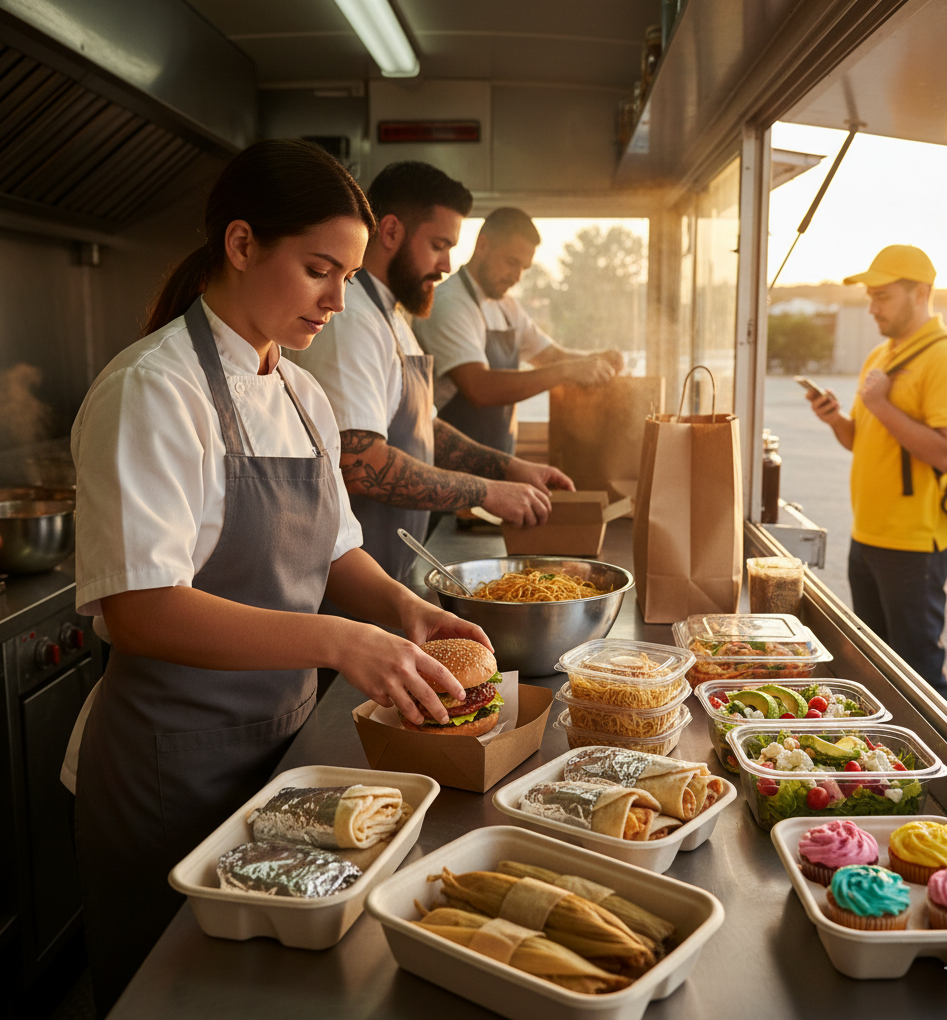


Starting a food business remains one of the strongest business opportunities in Mexico. The reason is simple: food is not a luxury, it is a daily necessity.
However, not every model is equally profitable.
Here are 10 ideas with high demand and real earning potential if executed strategically.
1. Healthy Executive Meal Plans
High demand in office areas and coworking spaces.
Advantages:
-
Recurring orders
-
Standardized production
-
Good profit margins
-
Low waste
It is one of the most stable home-based business models.
2. Weekly Meal Subscription Services
Customers pay for 5 meals per week.
Benefits:
-
Predictable income
-
Better purchase planning
-
Customer loyalty
Ideal for scalable growth.
📱 Download the Homlunch app
If you want to manage orders, organize your menus, and reach more customers easily, you can use the Homlunch app. From your phone, you can publish your dishes, receive bookings, and connect with people looking for homemade food. Download it on Android or iOS and start professionalizing your business.
3. Specialized Mexican Street Food
Tacos, gorditas, quesadillas, or regional dishes.
Key strategy:
Specialization and consistency, not offering everything.
High rotation and affordable ingredient costs.
4. Custom Bakery and Desserts
Cakes, themed cupcakes, and desserts for events.
Higher margins if:
-
You work per order
-
You require advance payment
-
You offer unique designs
5. Specialized Regional Cuisine
Oaxacan, Yucatecan, Northern, or Veracruz-style cuisine.
Authenticity creates differentiation and allows higher pricing.
If you’re already cooking or want to start, you can take the next step.
👉 Register your kitchen on Homlunch and start selling your dishes from home in an organized and secure way.
6. Healthy or Fitness Food
Strong trend in urban areas.
Options include:
-
Keto meals
-
Vegan dishes
-
High-protein menus
-
Low-carb options
Customers are willing to pay more for health-focused alternatives.
7. Wings and Casual Food for Weekends
A strong model in neighborhoods and social gatherings.
Requires:
-
Good logistics
-
Strong digital promotion
-
Consistent quality
8. Corporate Breakfast Services
Offices need practical food solutions:
-
Box lunches
-
Coffee breaks
-
Executive breakfasts
Large orders = better profit margins.
9. Ready-to-Reheat Traditional Dishes
Ideal for busy families.
Benefits:
-
Efficient production
-
Easy storage
-
High convenience value
10. Seasonal Food and Desserts
Examples:
-
Rosca de Reyes
-
Chiles en nogada
-
Day of the Dead bread
-
Holiday dinners
Seasonal demand can generate strong short-term revenue.
How to Choose the Best Idea for You
Do not choose based only on trends.
Evaluate:
-
Ingredient cost
-
Production time
-
Local competition
-
Operational capacity
-
Real profit margin
A profitable business is one you can sustain, not just start.
How to Increase Demand
A good idea needs consistent customers.
Platforms like Homlunch connect home-based cooks with companies looking for:
-
Formal service
-
Invoicing
-
Consistent quality
-
Punctual delivery
Recurring corporate clients create financial stability.
If you want to analyze the market or get inspired, you can also see what other cooks are selling.
👉 Discover and order homemade meals from different local hosts on Homlunch.
Common Mistakes
-
Not calculating real costs
-
Competing only on price
-
Offering too many menu options
-
Not formalizing legally
-
Mixing personal and business finances
Frequently Asked Questions
Which food business is the most profitable?
It depends on your market, but executive meals and subscription models usually provide more stability.
How much can I earn?
It depends on volume and margin. With proper structure, it can become your main source of income.
Do I need permits?
Yes. Formalizing your operation allows you to grow safely and work with corporate clients.
Conclusion
Opportunities exist.
Demand is real.
But profitability depends on:
- Strategy.
- Cost control.
- Specialization.
- Recurring customers.
Start with focus, not improvisation.
Your kitchen can begin at home.
But your business must be built like a company from day one