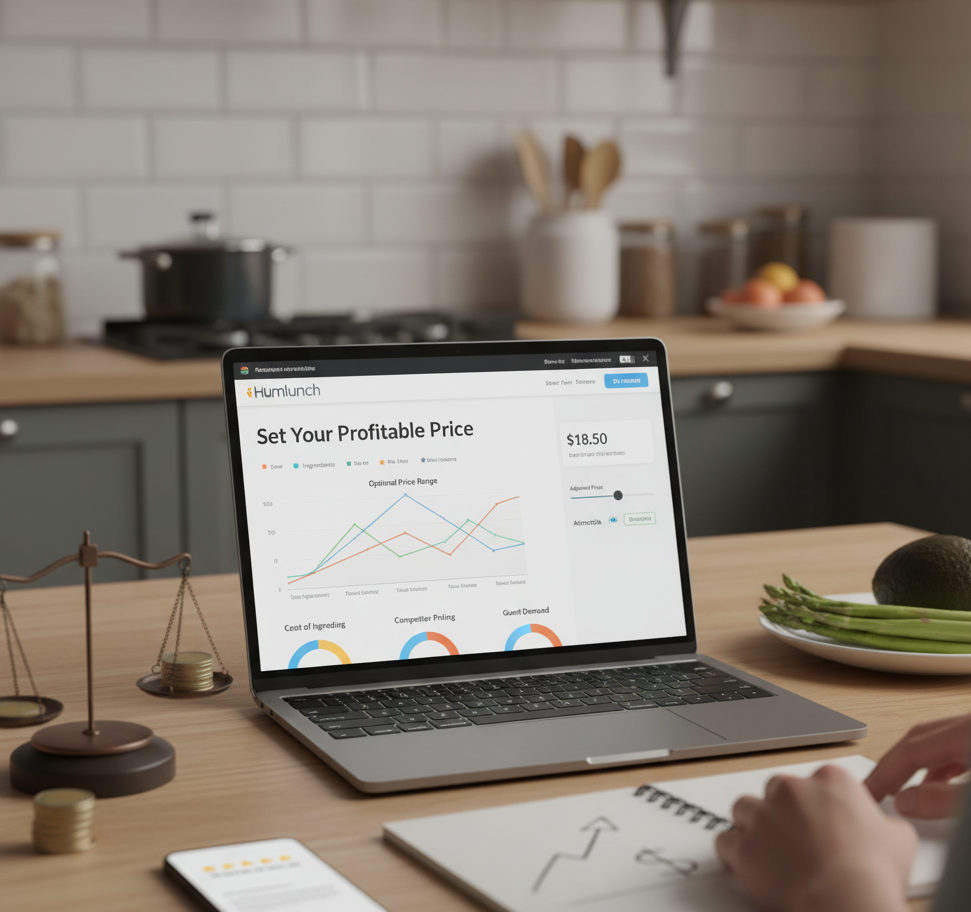


Setting the right price for your dishes on Homlunch is one of the most important decisions as a host.
It’s not just about covering costs, it’s about finding the balance between value, experience, and profitability.
Your food has a story, dedication, and quality that deserve recognition, and your price should reflect that.
1. Understand the Value of Your Offer
Before setting a price for your dishes, think:
What makes your experience unique? Do you offer a traditional homemade menu, a family recipe, or a culinary experience with local history?
Your price should communicate that value. If your kitchen offers something authentic, different, or hard to find, that justifies a competitive price.
2. Calculate Your Real Costs
A common mistake is forgetting to include every expense. Be sure to consider:
-
Ingredients (use up-to-date local market prices)
-
Utilities (gas, electricity, water)
-
Preparation and service time
-
Presentation and service details (tableware, decoration, drinks, etc.)
Adding these factors will allow you to set a realistic base price.
And if you want more clarity on how everything comes together in your final earnings, here you can see how the Homlunch commissions and payments system works.
3. Define Your Profit Margin
Once you’ve calculated your costs, add a margin that allows you to make a profit without losing accessibility.
On Homlunch, diners are looking for quality and authenticity, not necessarily the lowest prices.
A margin of 20% to 40% is usually reasonable depending on the type of experience and the exclusivity of your menu.
4. Observe Other Hosts’ Prices
Explore Homlunch and see what other hosts with similar offers are charging.
This will help you identify a competitive price range and adjust yours based on the added value you provide (for example, including a drink, dessert, or a cultural story behind the dish).
5. Create Tiered Menus
Offering different price levels is a smart strategy:
-
Basic: main dish and drink.
-
Complete: starter, main course, and dessert.
-
Premium: full menu with a special experience (talk, demo, or gourmet ingredients).
This way, you attract different types of diners and maximize your booking opportunities.
6. Be Transparent and Communicate Value
Your price shouldn’t just be a number, tell diners what’s included.
Mention if the ingredients are local, if the menu follows a family recipe, or if it’s inspired by a traditional celebration.
That transparency builds trust and perceived value.
7. Adjust According to Demand and Reviews
As you start receiving bookings, review your feedback and booking frequency.
If diners praise your quality and your calendar fills up quickly, you could slightly increase your prices.
If bookings decrease, try adjusting or adding value (a small complimentary detail, for example).
Homlunch is a dynamic community, your pricing can evolve with you.
🌟 Conclusion: Your Price Also Tells Your Story
Setting profitable prices doesn’t mean charging less, it means charging fairly for what you offer.
Every homemade meal on Homlunch is a unique experience that combines flavor, culture, and human warmth.
If you want to dive deeper into the financial side of your project, here you can discover how to make money cooking from home with Homlunch.
So value your work, be transparent, and offer an irresistible proposal.
👉 If you’re not yet part of the community, register as a host on Homlunch and start sharing your dishes with the world.